seo_admin

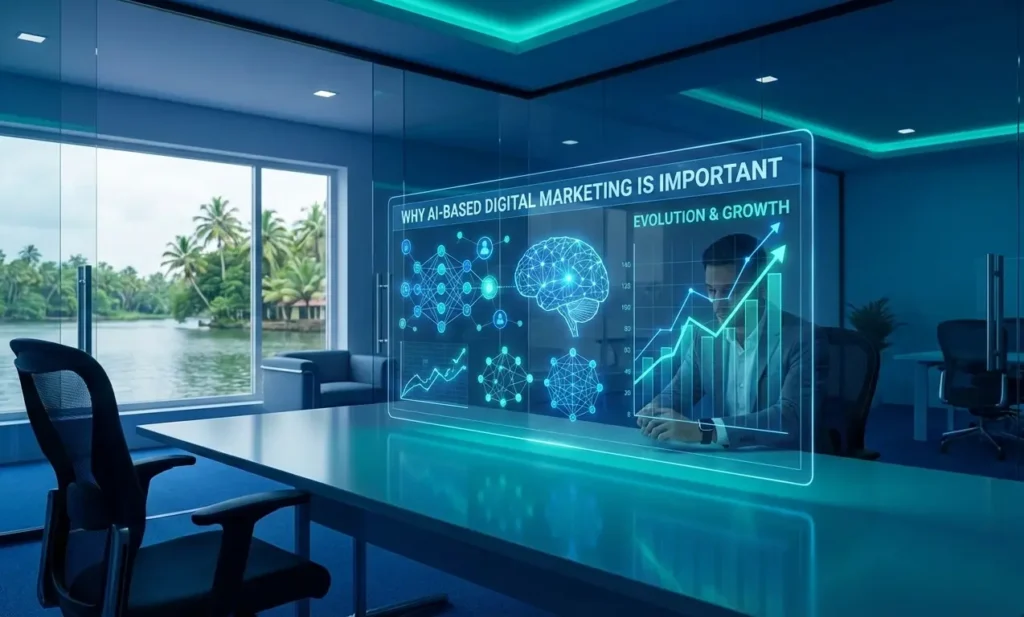
why AI based digital marketing is important for business growth in Kerala. blog hero image

Why AI Based Digital Marketing is Important

Why AI Based Digital Marketing is Important In today’s fast-paced digital landscape, staying ahead of the competition necessitates more than traditional marketing tactics. AI-based digital marketing has become a game-changer, allowing companies to analyze data, forecast trends, and provide highly customized client experiences with unparalleled efficiency. Companies that leverage AI can optimize marketing, increase ROI, and interact with their audiences in previously imagined ways. As the best digital marketing agency in Kerala, TLM Studios Pvt Ltd is leading this shift by assisting companies in utilizing AI to produce more intelligent, efficient, and significant marketing outcomes. How AI is Transforming Digital Marketing Artificial intelligence is transforming digital marketing in ways that were unthinkable just a few years ago. AI technology enables marketers to make precise data-driven decisions rather than simply automating tasks. One significant revolution is in consumer segmentation—AI can analyze massive databases to detect trends in behavior, tastes, and spending behaviors, allowing marketers to build highly tailored ads that actually resonate with their target demographic. AI is also transforming the production and optimization of content. AI-powered tools can produce engaging writing, recommend pertinent subjects, and even forecast what kind of content would work best for a particular demographic. This not only saves time, but also guarantees that marketing activities are continually matched with consumer preferences. Predictive analytics is another area where AI excels. Businesses can modify their strategy ahead of time by projecting trends, client needs, and future difficulties. AI-powered chatbots and virtual assistants are revolutionizing consumer connection by providing immediate assistance, tailored suggestions, and smooth cross-channel interactions. Furthermore, AI improves advertising efficiency by automatically optimizing ad placements, bidding tactics, and targeting, guaranteeing that every marketing dollar works harder and produces a measurable return. Additionally, it offers comprehensive insights into the effectiveness of campaigns, revealing useful patterns that assist marketers in continuously improving their tactics. AI Tools We Use for Digital Marketing Grammarly: Grammarly assists us in improving all written material, including emails, landing pages, blogs, and captions. With AI-powered grammar checking, tone recognition, and clarity suggestions, it keeps our communication clean, professional, and brand-aligned. ChatGPT: ChatGPT is essential for idea generation, content drafting, ad copywriting, and customer interaction scripting. Its natural language skills enable us to create original, compelling content faster without sacrificing quality. Google Gemini: Google Gemini offers advanced search insights, data analysis, and creative support. Whether we’re evaluating user intent, creating extensive study summaries, or improving multimedia content, Gemini helps us increase campaign accuracy and efficiency. SEMrush: One of our most significant AI-powered SEO tools is SEMrush. It is used for keyword research, competitor tracking, backlink auditing, and content improvement. Its intelligent suggestions help us increase organic visibility, improve ranks, and develop effective SEO tactics. Runway: For dynamic visual marketing, Runway is our preferred AI tool. It aids in producing videos of a high caliber, eliminating backdrops, improving footage, and producing cinematic graphics. This makes it possible for us to create excellent video content fast and affordably. Envato: We can create beautiful graphics, website elements, and marketing visuals with the use of Envato’s AI-backed design advice, templates, and creative tools. From posters to social media designs, Envato guarantees that our creatives stand out. Benefits of Using AI in Digital Marketing Enhanced Personalization: AI allows marketers to offer highly personalized experiences by evaluating user habits, preferences, and prior interactions. From individualized product recommendations to dynamic content on websites and emails, AI guarantees that each client feels appreciated. Data-Driven Decision Making: AI provides insights that humans would overlook by swiftly and precisely processing massive amounts of data. Marketers can spot trends, predict consumer behavior, and make informed decisions to improve campaign performance. Improved Customer Engagement: AI-powered chatbots, virtual assistants, and messaging apps allow companies to interact with clients around the clock. These solutions respond to concerns promptly, make recommendations, and improve overall customer satisfaction. Efficient Content Creation: AI tools like ChatGPT, Jasper.ai, and Copy.ai help generate high-quality content faster, from blog posts to social media updates. Marketers can focus on strategy while AI handles repetitive content creation tasks. Optimized Advertising & ROI: AI assesses ad performance, adjusts targeting, and optimizes spending in real-time. This guarantees that marketing funds are used effectively, increasing return on investment and decreasing wasteful spending. Predictive Analytics & Trend Forecasting: AI is able to predict consumer demands, market trends, and possible problems before they arise. This enables brands to proactively change their tactics and stay ahead of the competition. Time and Cost Savings: By automating repetitive processes such as email marketing, social media posting, and reporting, AI allows marketers to focus on creative strategy and innovation, eventually saving time and money. Continuous Improvement: Over time, AI systems learn and get better. With each campaign, AI improves targeting, message, and methods, resulting in better marketing and more consistent outcomes. Why AI Based Digital Marketing is Important 2025 and Beyond As we approach 2026, digital marketing is witnessing one of the most significant shifts in its history, fueled entirely by artificial intelligence. Every day, consumer behavior is changing, competition is growing, and companies today need to be more precise, quick, and personalized than ever before. All of this is now made possible by artificial intelligence. Consumer Expectations Are Higher Than Ever: Customers today demand hyper-relevant content, personalized recommendations, and prompt responses. By comprehending user behavior in real time and providing customized experiences across all platforms, AI assists marketers in meeting these expectations. AI Cuts Through Digital Noise: With millions of articles, commercials, and videos submitted every day, it’s becoming increasingly difficult to stand out. AI solutions assist in determining what type of content performs best, the optimal time to post, and the precise audience to target, ensuring that every marketing effort has the greatest impact possible. Predictive Marketing Is the New Competitive Edge: AI forecasts the future in addition to analyzing the present. AI enables businesses to make proactive decisions rather than reactive ones, something that traditional tactics cannot do, from trend forecasting to anticipating future client wants. Efficiency and Automation Reduce Costs: Automation will be

Why AI Based Digital Marketing is Important Read More »

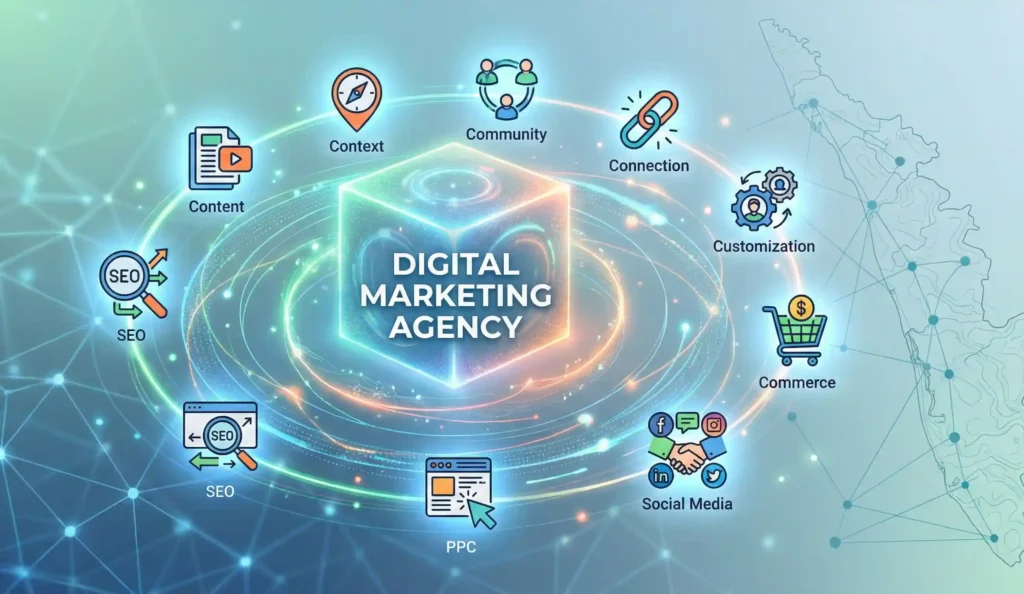
A visual concept explaining what do you mean by a digital marketing agency and its core components, like SEO, Content Marketing, and the 7 C's.

What Do You Mean by a Digital Marketing Agency

What is Digital Marketing? Digital marketing is the process of promoting items, services, or brands through internet platforms and digital technologies. Instead of using conventional techniques such as print ads or billboards, digital marketing reaches and engages audiences via the internet. Digital marketing allows organizations to access a larger and more targeted audience while costing less than traditional marketing tactics. It enables real-time campaign tracking and modifications, hence optimizing outcomes. It also raises brand awareness, improves consumer engagement, and accelerates sales growth. Key Components of Digital Marketing Social Media Marketing: Promoting through platforms like Instagram, Facebook, LinkedIn, and YouTube. Search Engine Optimization (SEO): Improving website visibility on search engines like Google. Search Engine Marketing (SEM): Paid ads on search engines (e.g., Google Ads). Content Marketing: Creating valuable content such as blogs, videos, and infographics to attract customers. Email Marketing: Sending targeted emails to nurture leads and maintain customer relationships. Affiliate Marketing: Partnering with affiliates who promote your product for a commission. Influencer Marketing: Using influencers to reach larger or niche audiences. Analytics & Reporting: Tracking performance and understanding user behavior. What is a Digital Marketing Agency? A digital marketing agency is a company that helps businesses promote their products or services online via various digital channels such as social media, search engines, email, and content marketing. These organizations develop plans, run campaigns, and assess performance to assist businesses in efficiently reaching their target audience and growing their online presence. TLM is the best digital marketing agency in Kerala, providing comprehensive services like as SEO, social media management, content production, and paid advertising to assist businesses in enhancing digital visibility, engagement, and sales. What are the 4 Types of Digital Marketing Search Engine Optimization (SEO): Optimizing your website and content to rank better in search engines such as Google, resulting in more organic visitors. Content Marketing: Creating valuable content such as blogs, videos, infographics, or ebooks to attract, educate, and engage your target audience. Social Media Marketing (SMM): Promoting products or services on social media platforms like Facebook, Instagram, LinkedIn, and Twitter to build brand awareness and engagement. Pay-Per-Click Advertising (PPC): Running paid ads on platforms like Google Ads or social media, where businesses pay only when users click on their ads, driving targeted traffic quickly. What are the 7 C’s of Digital Marketing? The seven C’s of digital marketing are essential components that assist companies in developing successful online marketing plans. They guarantee that your online presence is results-driven, customer-focused, and engaging.  These are as follows: Content: Creating valuable, relevant, and consistent content that attracts and engages your target audience. Context: Ensuring your content is presented in the right format, platform, and context for maximum impact. Community: Building and nurturing an online community around your brand through social media, forums, or groups. Customization: Personalizing your messages and offers to match the needs and preferences of individual users. Communication: Maintaining two-way communication with your audience to build trust and engagement. Consistency: Keeping your messaging, branding, and user experience consistent across all digital channels. Conversion: Designing your digital strategy to guide users toward taking desired actions, such as making a purchase or subscribing. Guidelines to Choose the Best Digital Marketing Agency Selecting the best digital marketing partner is essential to the expansion of your company. Here are some important guidelines to help you choose the best digital marketing agency in Kerala: Check Their Experience and Expertise: Look for agencies with a strong track record in your area and proficiency in a variety of digital marketing platforms. Evaluate Their Portfolio: Examine previous projects and case studies to observe the outcomes they have produced for other customers. Services Offered: Ensure that the company offers a wide range of services, including SEO, social media marketing, PPC, content marketing, and analytics. Client Reviews and Testimonials: To evaluate the agency’s dependability, professionalism, and efficacy, read client testimonials. Transparency and Communication: Select an organization that provides you with regular updates and is willing to talk about tactics and advancements. Customized Strategies: Avoid agencies that offer one-size-fits-all solutions. The best agency will customise strategies to meet your specific business goals. ROI-Focused Approach: Make sure the agency is focused on producing measurable results and maximizing your return on investment. By adhering to these rules, you can collaborate with the best digital marketing agency in Thodupuzha Kerala to promote your company’s expansion, engagement, and long-term success. Is AI Replacing Digital Marketing? AI is transforming digital marketing, but it is not replacing it. Instead, it improves the way marketers work by automating activities, accelerating data analysis, and improving personalization. Content Creation & Curation: AI tools can generate drafts, suggest topics, or optimize content for SEO. Customer Insights: AI analyzes large datasets to predict customer behavior and preferences. Automation: Chatbots, email campaigns, and social media scheduling can be managed efficiently using AI. Ad Targeting: AI helps deliver highly targeted ads to the right audience at the right time. However, human innovation, planning, and emotional understanding remain unmatched. AI acts as a strong assistant, enabling marketers to concentrate on innovation and establishing lasting relationships with audiences. How Do Digital Marketing Agencies Help Businesses Meet Their Financial Goals? Digital marketing companies play an important role in assisting organizations in meeting their financial objectives by developing strategies that promote growth, enhance revenue, and maximize return on investment (ROI). This is how they accomplish it: Targeted Marketing: Agencies identify and reach the correct audience, ensuring that marketing efforts are focused on potential consumers who are most likely to convert, so avoiding waste. Lead Generation & Conversion: Through tactics like SEO, PPC, and social media marketing, agencies draw in potential customers and navigate them through the sales funnel to boost sales. Brand Awareness & Trust: By developing an effective online presence with consistent messaging, businesses assist in establishing brand credibility, which can lead to improved customer retention and repeat purchases. Data-Driven Decisions: Agencies employ analytics and performance tracking to assess campaign efficacy, helping organizations to optimize strategies and increase ROI. Cost-Effective Strategies: Digital campaigns can be more

What Do You Mean by a Digital Marketing Agency Read More »

graphic design case study- blog hero image

Graphic Design Work Case Study

Graphic Design Work Case Study In the fast-paced world of digital marketing, strong images are more than simply an add-on; they are the driving force behind brand identification, audience engagement, and successful campaigns. This case study takes you behind the scenes of our graphic design approach, demonstrating how strategic creativity, thoughtful execution, and purpose-driven design improved a client’s brand presence. Discover how TLM Studios Pvt Ltd combines creativity and strategy to produce ideas that not only look good but also function well, from the first thoughts to the finished visual assets. Our Graphic Design Work Case Study: Synthite Our association with Synthite, the world’s largest producer of spice extracts, spice powders, and essential oils, started with a simple yet intriguing request—they requested us to design an appealing brochure for their cosmetic ingredient range. Their objective was very clear: create something eye-catching, educational, and high-end enough to draw clients from around the world. From concept to final implementation, TLM Studios Pvt Ltd, the best creative agency in Kerala, created a brochure that perfectly complemented their corporate identity and product essence. The outcome? Synthite was thrilled with the result. Our design not only met their expectations but also improved how they displayed their products to the world. A single brochure project quickly developed into a long-term collaboration. Impressed by our artistic approach and delivery, Synthite entrusted us with multiple brochure and design assignments across their various product ranges. Check out the Instagram links below to see our design methodology, behind-the-scenes procedure, and final results. Follow us for more intriguing content as we continue transforming ideas into powerful visuals. Objective When Synthite initially contacted us, their main objective was to create a visually appealing and expertly designed brochure that could successfully present their line of cosmetic ingredients to prospective clients. They need a design solution that not only emphasizes product quality but also increases their brand presence, making their offers more appealing and marketable. Their objective was simple yet essential: to create a brochure that conveys value, draws attention, and enhances their sales initiatives with an outstanding visual impact. Our Process Understanding the Client’s Requirement: We started by comprehending Synthite’s primary goal, which was to produce an eye-catching brochure for their line of cosmetic ingredients that would immediately pique consumers’ interest. Brand & Market Research: Our team researched Synthite’s brand identity, product uses, and target demographic to ensure that the design correctly reflected their position as a global industry leader. Concept Development: We developed design concepts that integrated clean layouts, ingredient-focused images, and compelling storytelling to highlight the product’s benefits and distinctiveness. Content Structuring & Copywriting: Our writers produced concise, compelling text that conveyed important product details while maintaining a polished, customer-focused tone. Design & Visual Execution: After the concept was finalized, our designers turned it into a polished brochure with eye-catching compositions, brand-consistent colors, and excellent graphics. Client Review & Revisions: We worked closely with the Synthite team, improved the design in response to their suggestions, and made sure the finished product surpassed expectations. Successful Delivery & Extended Partnership: With the success of the initial brochure, Synthite entrusted us with many more projects across their various product ranges—marking the beginning of a long-term creative cooperation. Output The result was a series of eye-catching, well-organized brochures that flawlessly complemented Synthite’s brand identity and international norms. Each brochure was designed to showcase their products with elegance, clarity, and powerful visual storytelling, making complicated information simple for prospective customers to comprehend. The designs significantly increased product appeal, let Synthite stand out in a competitive market, and improved customer communication. The favorable response to our original delivery resulted in several repeat projects, demonstrating the impact and effectiveness of the creative product. What Happened After The results spoke for themselves. Synthite was quite delighted with the finished product. The brochure not only met their expectations but also improved the visual appeal, allowing them to present their items with better clarity and impact. Synthite continues to engage with us on a number of subsequent projects after being impressed by the caliber, reliability, and promptness of our work. This fruitful collaboration grew into creating brochures for their many product lines, strengthening a long-term creative connection based on dependability, trust, and exceptional design.   Brochure, Brochure reel , Brochure reel 2, Brochure reel 3 How Can We Help You? TLM Studios brings your ideas to life through creativity, clarity, and purpose. As the leading graphic design agency in Kerala, we help brands tell their stories via careful design and visually attractive concepts. Whether you require a brochure, brand identity, product packaging, social media creatives, or a full visual makeover, our team makes sure that every design is in line with your objectives and appeals to your target market. From comprehending your brand’s challenges to creating designs that motivate action, we offer end-to-end assistance—idea creation, copy, design, and final delivery. Whatever your sector or scale, TLM Studios is here to strengthen your brand voice and assist you in making an important difference through outstanding, innovative design. Instagram  Facebook  Youtube  Twitter  Linkedin 

Graphic Design Work Case Study Read More »

An image showing a copywriter designing advertising copy on a laptop, highlighting what advertising copy is, with a digital ad on the screen.

 What is Advertising Copy?

What is Advertising Copy (Ad Copy) In a world where brands compete for consumers’ attention, the correct words can make all the difference. That’s where advertising copy—often called ad copy—comes in. It’s more than just a compelling line or an effective slogan; ad copy is the effective, persuasive content that encourages audiences to think, feel, or take action. Whether it’s a headline that stops you mid-scroll, an appealing description that advertises a product, or a call-to-action that encourages you to click, great ad copy integrates creativity with marketing insight. In this blog, we will discuss what advertising copy is, why it is important, and how it influences how brands interact in today’s digital age. Why Ad Copy is Important Ad copy is an important part of how a brand interacts with its target audience. In a congested environment where customers encounter thousands of messages each day, strong ad copy can help your company stand out. It draws in viewers, piques their curiosity, and directs them toward a particular action, be it purchasing a product, registering for a service, or just remembering your brand. Effective advertising copy influences as well as informs. It establishes emotional connections, resolves issues, emphasizes advantages, and fosters trust. When written correctly, ad text may convert casual viewers into engaged customers, allowing businesses to enhance conversions, strengthen brand identification, and maximize marketing ROI. Ad text, to put it briefly, is the link between what a company offers and what a consumer chooses. Elements of a Good Ad Copy Strong advertising copy is composed of a number of essential components that come together to grab readers’ attention and motivate them to take action. Here are the key elements: A Compelling Headline: The first thing people notice is the headline. It should be understandable, captivating, and compelling enough to pique the reader’s curiosity. Clear Value Proposition: Good ad copy communicates what the audience will get from it right away. It emphasizes advantages, resolves problems, and explains why the good or service is worthwhile. Audience-Centered Messaging: Effective ad copy targets the target audience’s requirements, preferences, and emotions. It makes use of language that appeals to them and supports their goals. Persuasive Language: Words that convey a sense of urgency, exclusivity, or interest can have a major impact on engagement. Persuasive strategies such as emotional triggers, storytelling, and power words serve to reinforce the message. Strong Call-to-Action (CTA): Every ad copy must include a clear next action, whether it is “Buy Now,” “Learn More,” or “Sign Up Today.” A good CTA instructs readers on what to do and encourages immediate action. Brevity and Clarity: Effective advertising copy rapidly gets to the point. It conveys a message that is simple to comprehend and retain while avoiding superfluous words. Consistency with Brand Voice: Whether the tone is formal, fun, assertive, or minimalist, the content should reflect the brand’s personality. Maintaining consistency fosters recognition and trust. Visual & Contextual Alignment: The text should go well with the images and the platform on which it is displayed. A well-aligned message ensures that the entire advertisement feels unified and compelling. Types of Advertising Copy Advertising copy is available in a variety of formats and styles, each designed to accomplish particular objectives and work on various platforms. The most prevalent types are as follows: Direct Advertising Copy: This type is simple, focusing on providing clear information about the product or service. It is widely used in print advertisements, brochures, and product listings. Indirect Advertising Copy: This style relies on emotions, storytelling, or subtle messaging rather than direct product information. It seeks to establish a bond or spark interest in the brand. Persuasive Advertising Copy: Strong emotional triggers, language that emphasizes rewards, and compelling arguments are all employed in persuasive content to persuade readers to act. Narrative or Storytelling Copy: This approach tells a story that emphasizes the value of the brand using characters, situations, or actual events. Long-form advertisements, social media campaigns, and video scripts frequently employ it. Comparative Copy: Comparative advertisements emphasize a product or service’s superiority over rivals by highlighting special features, cost savings, or performance advantages. Emotional Copy: This type connects with the audience’s feelings to create a memorable impact. Humorous Copy: Comedy-inspired advertisements are unique in that they entertain viewers. They are excellent for social media since they are entertaining, relatable, and very shareable. SEO Copy (Search-Optimized Advertising Copy): SEO-focused text, used in digital advertisements and landing pages, focuses on specific keywords to enhance visibility and increase search engine traffic. Technical Copy: Used for specialized or complex products, this copy clarifies features, specifications, and technical details concisely and accurately, common in industries like tech, healthcare, and engineering. Social Proof Copy: This style uses testimonials, reviews, case studies, or user feedback to establish trust and reliability. Call-to-Action Focused Copy: Ideal for sales, specials, and promotions, short, punchy language with the main goal of encouraging quick action. Rules to Follow While Writing an Ad Copy It takes strategy, clarity, and audience awareness in addition to creativity to write effective advertising text. These are the fundamental guidelines that all copywriters must adhere to: Know Your Audience: Before you write a single word, consider who you’re speaking with—their needs, interests, challenges, and motivations.  Make sure your message speaks to them. Keep It Clear and Simple: Steer clear of jargon and extremely complicated language. Given that most individuals skim text, effective advertising language conveys the point succinctly and simply. Focus on Benefits, Not Just Features: Explain how the product or service will benefit the customer’s life. People are more interested in outcomes than specifications.  Use a Strong, Action-Oriented CTA: Give readers clear instructions on what to do next, such as “Learn More,” “Sign Up,” or “Buy Now.” Conversions are fueled by an engaging CTA. Grab Attention with a Powerful Headline: Your headline should pique readers’ attention right away. If the headline fails, the rest of the material will be overlooked. Maintain Consistent Brand Voice: Whether your brand is playful, formal, bold, or minimalist, the tone should be

 What is Advertising Copy? Read More »

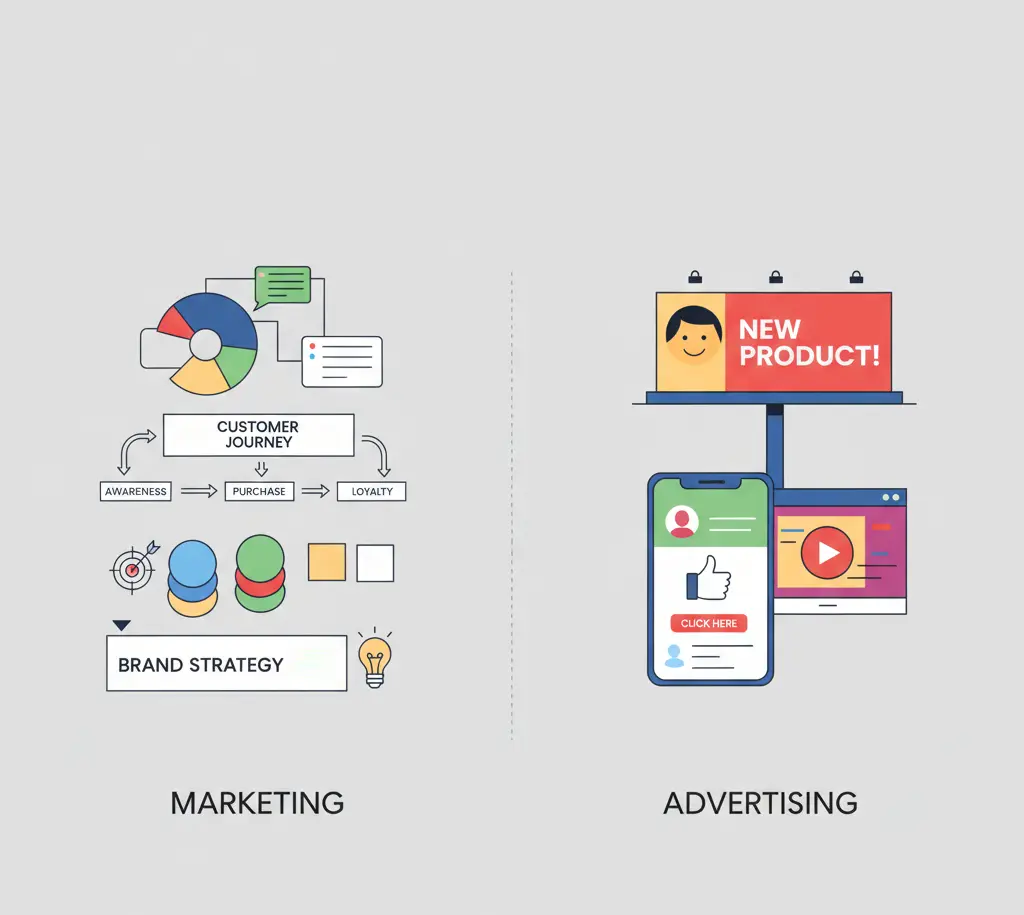
Illustration explaining are advertising and marketing the same thing with visuals comparing marketing strategy and advertising campaigns

Are advertising and marketing the same thing?

The terms marketing and advertising are frequently used synonymously in today’s hectic corporate environment, but are they truly the same? Both are essential for establishing a brand and promoting company expansion, but they have different functions and work in different ways. By comprehending consumer demands, developing strategies, and creating long-term value, marketing establishes the groundwork. Contrarily, advertising is only one effective instrument in that strategy, which is centered on spreading messages, gaining awareness, and drawing attention. This blog examines how these two notions overlap and vary, as well as why recognizing the distinction can change the way organizations communicate with their customers. What is Advertising?   Advertising is a type of sponsored communication that companies, brands, or people use to market goods, services, or concepts to a target market. Its primary goals are to draw attention, raise awareness, and influence people to perform a desired action, like buying something, registering, or remembering a brand. Here are the key elements of advertising: Paid Promotion: Advertisers pay for space or time on platforms like TV, social media, search engines, newspapers, billboards, etc. Targeted Messaging: The message is crafted specifically for a certain audience. Brand Visibility: It helps increase recognition and recall. Persuasion: Ads are designed to influence consumer choices and behaviour. Types of Advertising   Traditional Advertising: These are the classic, offline forms of ads that have been used for decades. Television Advertising: Commercials aired on TV channels. Radio Advertising: Audio advertisements broadcast on radio stations. Print Advertising: Ads in newspapers, magazines, brochures, and flyers. Outdoor / Out-of-Home (OOH): Billboards, bus shelters, hoardings, transit ads, posters, etc. Direct Mail: Promotional letters, catalogues, and postcards sent to people’s homes. Digital Advertising: Any ad delivered through digital or online platforms. Social Media Ads: Paid promotions on Facebook, Instagram, LinkedIn, YouTube, etc. Search Engine Advertising (PPC): Google Ads, Bing Ads, sponsored search results. Display Advertising: Banner ads on websites and apps. Video Advertising: Ads on YouTube, OTT platforms, reels, and short-video apps. Email Advertising: Promotional emails sent to targeted subscribers. Mobile Advertising: In-app ads, SMS promotions, push notifications.   Content-Based Advertising: Focuses on delivering valuable content that subtly promotes a brand. Native Advertising: Ads that blend naturally with website or app content (e.g., sponsored articles). Influencer Advertising: Brands partnering with influencers to promote products. Sponsored Content: Paid blogs, videos, or posts created for promotional purposes.   Performance-Based Advertising: Payment depends on actions taken by the viewer. Affiliate Advertising: Paying affiliates a commission for each sale or lead. Cost-Per-Click (CPC) / Cost-Per-Action (CPA) Ads: Advertisers pay only when users click or complete an action.   Experiential & Non-Traditional Advertising: Engages consumers through real-world interactions. Event Sponsorships: Branding at sports events, expos, concerts, etc. Guerilla Advertising: Creative, surprising, low-cost street or public ads. Ambient Advertising: Unique ads placed in unexpected locations (e.g., elevators, shopping carts). What is Marketing?   Marketing is the strategic process of identifying client needs, offering value, and developing strong relationships to drive business growth. It includes everything a business does to determine its target market, create the best goods or services, communicate clearly, and provide a positive client experience. Market Research: Studying customer needs, preferences, competition, and trends. Product Development: Creating or improving products/services based on customer insights. Branding: Building a unique identity, tone, and perception. Pricing: Setting the right price based on value, costs, and market demand. Promotion: Communicating with customers through advertising, PR, social media, content, etc. Distribution: Ensuring the product reaches customers at the right place and time. Customer Relationship Management (CRM): Maintaining ongoing engagement and loyalty. Types of Marketing   Digital Marketing: Marketing efforts that use online or electronic channels. Search Engine Optimization (SEO): Improving website visibility on search engines. Social Media Marketing (SMM): Promoting through platforms like Instagram, Facebook, LinkedIn, etc. Content Marketing: Creating blogs, videos, guides, and other valuable content to engage audiences. Email Marketing: Sending newsletters, offers, and updates to subscribers. Pay-Per-Click Marketing (PPC): Paid ads on Google, Bing, and social media platforms. Influencer Marketing: Partnering with creators or influencers to promote products. Affiliate Marketing: Rewards partners for bringing sales or leads. Video Marketing: Using videos, reels, and YouTube content to build brand engagement.   Traditional Marketing: Offline marketing methods have been used for decades. Print Marketing: Newspapers, magazines, brochures, pamphlets. Broadcast Marketing: TV and radio promotions. Outdoor Marketing (OOH): Billboards, hoardings, posters, transit ads. Telemarketing: Phone calls to promote products/services. Direct Mail: Physical mailers, catalogues, and postcards.   Content & Relationship-Based Marketing Content Marketing: Educating or informing customers through blogs, eBooks, videos, etc. Inbound Marketing: Attracting customers by offering valuable information instead of pushing ads. Relationship Marketing: Building long-term customer loyalty through personalized engagement. Brand Marketing: Strengthening brand identity, image, and emotional connection. Data-Driven & Performance Marketing Performance Marketing: Paying only for measurable outcomes (clicks, leads, sales). Data-Driven Marketing: Using customer data and analytics for targeted campaigns. Marketing Automation: Using tools to automate emails, workflows, and customer journeys. Growth Marketing: Experimentation-focused approach to rapidly scale a brand.   Experiential & Field Marketing Event Marketing: Promoting through exhibitions, trade shows, and launches. Experiential Marketing: Real-life experiences that allow customers to engage with the brand. Guerilla Marketing: Creative, unconventional marketing stunts. Sampling/Field Marketing: Distributing samples in public places or stores.   Niche & Specialized Marketing B2B Marketing: Targeting businesses instead of consumers. B2C Marketing: Targeting individual customers. Influencer Marketing: Leveraging trusted personalities to promote products. Seasonal Marketing: Campaigns tied to festivals, holidays, or seasons. Local Marketing: Targeting a specific geographic area. 4 Ps of Marketing   The 4 Ps of Marketing, often known as the Marketing Mix, are the four essential components that organizations employ to effectively sell their products or services. They assist businesses in developing strategies that draw clients, add value, and maintain their competitiveness. Here’s a simple breakdown: Product: This describes what a company provides, whether it is a tangible good, a service, or a digital product. Features, quality, design, branding, packaging, and the value it offers the consumer are all included. Price: This is what customers pay for the goods. Production costs,

Are advertising and marketing the same thing? Read More »

Reasons to hire a creative ad agency for marketing in Kerala with a dynamic team collaborating on strategies.

Reasons to Hire a Creative Ad Agency for Marketing

Being unique in the fast-paced digital world of today requires more than simply having a high-quality product; it also involves telling your narrative in an original way. A creative advertising agency can help with that. Working with the appropriate agency may provide your marketing initiatives with new insights, creative concepts, and well-thought-out execution, regardless of how big or small your company is. From creating innovative ads to establishing an effective brand voice, a creative ad agency enables you to transform your vision into tangible outcomes — guaranteeing your message not only attracts the audience but genuinely connects with them. What is a Creative Ad Agency?   A creative ad agency is a company that creates and implements new marketing and advertising strategies to promote companies, products, or services. Unlike typical marketing organizations, which primarily focus on strategy or media buying, creative agencies concentrate on concepts, storytelling, and design, transforming ideas into effective campaigns. They manage everything from brand identity and advertising campaigns to video creation, social media content, and digital marketing assets. A creative ad agency’s mission is to connect emotionally with consumers, differentiate businesses, and drive engagement by producing innovative, unique, and visually appealing material. Reasons to Hire a Creative Ad Agency for Your Marketing Campaign   Fresh Creative Perspective One of the most significant benefits of employing a creative advertising agency is having access to new, inventive ideas. Internal teams frequently grow accustomed to a brand’s current tone and style, which makes it more difficult to innovate. However, a creative agency offers an outsider’s perspective, viewing your brand from the viewpoint of your target market. They may rethink your messaging, spot unexplored chances, and create concepts that stand out in a congested industry. This fresh viewpoint frequently results in ground-breaking efforts that draw interest and encourage participation. Professional Branding Expertise A creative advertising firm understands that your brand is more than simply a logo or phrase; it’s the narrative and feeling that drive your company. Their teams specialize in developing integrated brand identities that reflect your beliefs and appeal to your target audience. Whether they are redesigning images, developing your brand voice, or structuring your storytelling, agencies guarantee that every detail is precisely aligned. Throughout all marketing channels, this uniformity fosters awareness and confidence. A strong brand identity eventually makes you stand out and remain recognizable in your field. Access to Skilled Professionals When you collaborate with a creative ad firm, you are not just employing one person, but an entire team of experts. From graphic designers and copywriters to video editors and digital strategists, each individual offers a unique skill set to your campaign. Every aspect, from conception to implementation, is handled with accuracy and originality thanks to this team’s ability. You get a cohesive, cooperative strategy that saves time and improves quality rather than managing several independent contractors. The end product is a campaign that feels unified, functions well, and has a polished appearance. Cost and Time Efficiency Hiring an agency may appear to be expensive at first, but it is often more cost-effective in the end. Managing an internal marketing team necessitates pay, tools, training, and overheads, whereas an agency offers everything under one roof. They already possess the creative tools, technologies, and strategic expertise required to produce outcomes quickly. Additionally, an agency’s simplified workflow speeds up campaign execution without sacrificing innovation. This saves your company time and money by allowing you to focus on growth while they handle the marketing. Data-Driven Strategies Modern creative companies do not rely on guessing; instead, they employ data and analytics to support all creative decisions. They analyze market trends, audience insights, and campaign performance to develop plans that provide demonstrable results. This combination of creativity and data ensures that your advertisements are not only visually appealing but also strategically effective. Agencies use critical indicators, including as engagement, conversions, and ROI, to optimize campaigns in real time. You can be sure that your marketing initiatives are focused, effective, and significant when you use this data-driven strategy. Stronger Brand Engagement A creative ad agency can assist you in moving beyond simple advertising to form genuine connections with your target audience. Through visually captivating images, compelling storytelling, and emotionally appealing campaigns, they guarantee your brand message truly resonates. Consistent, innovative content across media keeps your target audience interested and eager to interact with your brand. This ongoing interaction aids in converting occasional visitors into devoted clients and brand promoters. These close relationships eventually foster loyalty, trust, and long-term corporate success. Why TLM Studios is Recognized as Best Creative Ad Agency in Thodupuzha, Kerala TLM Studios Pvt Ltd has established itself as the best creative ad agency in Kerala by continuously producing campaigns that blend strategy, creativity, and quantifiable impact. The Thodupuzha-based agency is notable for its creative branding, advertising, and digital storytelling strategies that enable companies of all sizes to establish strong connections with their target audience. We provide comprehensive creative solutions that translate ideas into strong visual experiences, ranging from concept creation and video production to social media marketing and business branding. What genuinely distinguishes us is our client-focused methodology, which ensures that each campaign is created with a thorough understanding of the brand’s essence and aims. With the support of a group of talented designers, strategists, and storytellers, the firm delivers creative work that not only looks nice but also generates outcomes. Whether creating a new brand or reinventing an existing one, TLM Studios continues to raise the standard for originality and professionalism, making it the top choice for businesses looking for the best ad agency in Kerala. Instagram  Facebook  Youtube  Twitter  Linkedin 

Reasons to Hire a Creative Ad Agency for Marketing Read More »

Visual representation of what is a marketing funnel by the best digital marketing agency in Kerala

What is a Marketing Funnel

What is a Marketing Funnel A Marketing Funnel is more than just a notion; it’s a strategic structure that helps firms analyze, guide, and improve the customer experience. The concept is that at the top of the funnel (TOFU), you have a large audience, many of whom are unaware that they have an issue that your product or service can help them with. As they progress through the funnel, they get more engaged and qualified, until a smaller group reaches the bottom (BOFU) and transforms into paying customers. Stages of Marketing Funnel   Awareness (Top of the Funnel – TOFU) Goal: Let people know your brand, product, or service exists. What happens: Potential customers first hear about you. Tactics: Social media posts, blog articles, SEO, paid ads, PR campaigns. Metrics: Website visits, ad impressions, social reach. Interest Goal: Capture attention and engage prospects. What happens: People start learning more about your offerings and consider them relevant. Tactics: Email newsletters, videos, webinars, engaging content. Metrics: Click-through rates, content downloads, newsletter subscriptions. Consideration (Middle of Funnel – MOFU) Goal: Help prospects evaluate your product or service. What happens: They compare options and research solutions. Tactics: Case studies, demos, free trials, product comparisons. Metrics: Demo requests, trial signups, product page views. Intent Goal: Encourage the prospect to take action toward purchase. What happens: They show clear interest, like adding items to a cart or requesting a quote. Tactics: Retargeting ads, personalized offers, and limited-time discounts. Metrics: Cart additions, pricing page clicks, inquiry forms submitted. Purchase (Bottom of Funnel – BOFU) Goal: Convert prospects into paying customers. What happens: They complete the purchase. Tactics: Smooth checkout, multiple payment options, sales support. Metrics: Sales, conversion rates, revenue. Loyalty / Advocacy (Post-Purchase) Goal: Turn customers into repeat buyers and brand advocates. What happens: They may buy again and recommend your brand to others. Tactics: Loyalty programs, follow-ups, referral incentives, and excellent customer service. Metrics: Repeat purchase rate, Net Promoter Score (NPS), referrals, customer lifetime value (CLV). Top of the Funnel – Explained   The Top of the Funnel (TOFU) is the first stage of the marketing funnel, and its primary purpose is to raise awareness of your brand, product, or service. At this stage, potential clients are still learning about you and might not even be aware that they have a problem that your company can help with.  Consider TOFU as a broad net. Reaching as many people as possible and introducing your business in a way that attracts interest and piques their curiosity is the goal. At this point, increasing visibility, trust, and interest is more important than selling.  Key Activities at TOFU: Content marketing (blogs, infographics, videos) Social media campaigns and posts Search engine optimization (SEO) Paid advertisements (Google Ads, social media ads) Public relations, events, and webinars Objectives: Make your brand known to a broad audience Educate potential customers about industry problems or opportunities Start engaging people in a non-salesy way Metrics to Track: Website traffic Social media reach and engagement Ad impressions and clicks Number of new visitors or leads Middle of Funnel – Explained   The Middle of the Funnel (MOFU) is the point at which potential clients have advanced beyond awareness and are thinking about your product or service as a solution to their requirements. Unlike the Top of the Funnel (TOFU), MOFU focuses on nurturing leads, establishing trust, and guiding them to a conclusion.  At this stage, your audience is assessing options, analyzing competitors, and searching for proof that your solution can solve their issue efficiently. During this “consideration” stage, your marketing campaigns should try to inform, show value, and establish your brand as the greatest option.  Key Activities at MOFU: Product demonstrations or walkthroughs Case studies showcasing success stories Free trials or sample offers Webinars and educational guides Email campaigns targeting engaged leads Objectives: Build trust and credibility with potential customers Highlight the unique benefits and value of your solution Move leads closer to a purchase decision Metrics to Track: Number of demo requests or trial sign-ups Downloads of guides, eBooks, or whitepapers Engagement with emails and targeted content Time spent on product/service pages Bottom of the Funnel – Explained The Bottom of the Funnel (BOFU) is the marketing funnel’s last step, when potential customers are ready to make a purchase. They are currently weighing the last few aspects before deciding to use your product or service, having already passed through the awareness (TOFU) and deliberation (MOFU) phases. The main goal of BOFU is conversion. Your marketing and sales efforts are centered on reducing any remaining barriers, reinforcing value, and making it simple for prospects to purchase. This step frequently includes personalized communication and direct engagement to create a smooth purchasing experience.   Key Activities at BOFU: Product demos tailored to the prospect’s needs Personalized offers, discounts, or promotions Consultations or one-on-one sales calls Testimonials, reviews, and case studies emphasizing results Simplified checkout or onboarding processes Objectives: Convert leads into paying customers Provide reassurance and remove friction in the buying process Strengthen confidence in choosing your brand over competitors Metrics to Track: Conversion rate (leads to customers) Number of completed purchases or subscriptions Average order value Sales cycle length and success rate How to Develop a Marketing Strategy   A marketing strategy is a strategic plan for reaching your target audience, promoting your products or services, and meeting business objectives. Here is a thorough, step-by-step tutorial: Step 1: Define Your Business Goals Understand what you want to achieve with your marketing efforts. Goals should be specific, measurable, achievable, relevant, and time-bound (SMART). Step 2: Identify Your Target Audience Know who your ideal customers are. Create buyer personas including demographics, interests, challenges, behaviors, and motivations. Understand where your audience spends time online/offline and how they make purchasing decisions. Step 3: Analyze the Market and Competitors Conduct a market analysis to understand industry trends, opportunities, and threats. Perform a competitive analysis to identify what competitors are doing, their strengths, and weaknesses. This helps you find your unique selling proposition (USP)

What is a Marketing Funnel Read More »

Aerial photography of Kerala cityscape captured by the best creative agency in Kerala, TLM Studios

Everything You Need to Know about Aerial Photography

What is Aerial Photography? The technique of taking pictures of the ground, scenery, or buildings from a higher altitude, typically from the air, using equipment like drones, airplanes, helicopters, or satellites, is known as aerial photography. It provides photographers and businesses with a bird’s-eye view that cannot be obtained from the ground, as well as unique views, size, and contextual information. Types of Aerial Photography   Oblique Aerial Photography: Photos taken at an angle rather than directly overhead. Types: High oblique: Shows the horizon and gives a perspective view of the terrain. Low oblique: Focuses more on the subject without including the horizon. Uses: Real estate, tourism promotion, and landscape photography. Vertical Aerial Photography: Photos taken straight down from above (90° angle). Uses: Mapping, surveying, urban planning, agriculture, and GIS (Geographic Information Systems). Tilted or Modified Aerial Photography: Combines aspects of oblique and vertical photography for specialized purposes. Uses: Photogrammetry, 3D modeling, and detailed mapping. Drone Photography: Modern aerial photography using drones for flexible and affordable aerial shots. Uses: Real estate, marketing, events, cinematography, inspection, and tourism. Satellite Aerial Photography: Captured from satellites orbiting the Earth. Uses: Environmental monitoring, mapping, disaster management, and weather forecasting. Balloon or Kite Aerial Photography: Captured using cameras attached to balloons or kites. Uses: Surveying remote areas, creative photography, and environmental studies. Aerial Photography in India   Aerial photography in India has grown significantly due to developments in drone technology, legislative support, and a wide range of uses across industries. From capturing the architectural marvels of ancient structures to monitoring agricultural fields, aerial imagery provides unmatched perspectives and insights. Principles of Aerial Photography Aerial photography principles guarantee the accuracy, clarity, and utility of photos taken from above. Comprehending these concepts is crucial for uses such as scientific study, mapping, and surveying. Scale: The scale is the ratio of a distance on the photograph to the corresponding distance on the ground. Scale depends on flying height and the focal length of the camera. Maintaining a consistent scale is important for mapping and measurements. Geometry of Photography Aerial photos are affected by the position of the camera, altitude, and terrain relief. Vertical photographs minimize distortion and are preferred for mapping, while oblique photographs give perspective views. Coverage and Overlap Forward overlap: Consecutive photos overlap by 60–80% along the flight line. Side overlap: Adjacent flight lines overlap by 20–30%. Overlaps allow the creation of stereoscopic images for 3D viewing and accurate measurements. Orientation The camera should be properly oriented with respect to the terrain. Tilt must be minimized in vertical photos to avoid distortions. Orientation affects accuracy in measurements and mapping. Stereoscopy Taking overlapping photos allows stereoscopic viewing, giving a 3D perception of the terrain. Essential for topographic mapping, elevation measurement, and construction planning. Ground Control and Reference Using ground control points (GCPs) ensures the photographs can be correctly scaled and referenced on maps. Helps in accurate georeferencing and measurement. Timing and Lighting Aerial photography is influenced by sun angle, shadows, and atmospheric conditions. Optimal lighting ensures clear, sharp images without distortion. Factors Affecting Aerial Photography   The quality, clarity, and use of aerial photos are influenced by a number of factors. Understanding them assists in planning and carrying out successful aerial photography missions. Weather and Atmospheric Conditions Clouds, fog, haze, or dust can reduce visibility and clarity. Wind speed affects the stability of the aircraft or drone. Clear, sunny days are ideal for sharp images. Time of Day / Sun Angle The position of the sun affects shadows, contrast, and illumination. Mid-morning or mid-afternoon is usually best to avoid long shadows. Low sun angles can create dramatic shadows but may distort details. Altitude / Flying Height Determines the scale and coverage area of the photograph. Higher altitude covers more area but reduces detail; lower altitude increases detail but covers less area. Camera and Lens Characteristics Focal length, aperture, and sensor resolution affect image quality. High-quality lenses reduce distortion and improve sharpness. The type of camera (digital, film, infrared) determines the type of data captured. Flight Path and Orientation Correct flight line planning ensures proper overlap and coverage. Camera tilt or orientation can cause distortions if not controlled. Terrain and Ground Relief Uneven terrain can cause scale variations in vertical photos. Hilly or mountainous areas may require special planning for accurate coverage. Stability of Aircraft or Drone Vibrations or sudden movements affect image sharpness. Stabilized cameras or gimbals help maintain clarity. Type of Photography Vertical vs. oblique photography determines perspective and the type of distortions expected. Uses of Aerial Photography Aerial photography offers a perspective of the Earth from above, which is useful in a variety of industries. Its uses can be practical, commercial, and scientific. Mapping and Surveying Creating topographic maps and contour maps. Land surveys for urban planning and construction. Boundary demarcation for property or governmental purposes.   Agriculture and Forestry Monitoring crop health, irrigation, and soil conditions. Detecting pest infestations or disease in plants. Forest mapping, tree density analysis, and deforestation tracking. Urban Planning and Infrastructure Planning roads, bridges, and urban layouts. Monitoring construction progress. Managing traffic and land use planning. Disaster Management Assessing damage after floods, earthquakes, or storms. Coordinating relief operations. Identifying safe routes and affected areas. Military and Defense Reconnaissance and surveillance. Planning strategic operations. Monitoring border areas or hostile territories. Environmental Studies Tracking pollution, erosion, and natural resource changes. Monitoring coastal areas and wetlands. Wildlife habitat assessment. Real Estate and Tourism Showcasing properties from above for marketing. Highlighting tourist destinations, resorts, and natural landscapes. Archaeology and Heritage Conservation Discovering ancient sites and monuments. Documenting heritage sites for restoration. Cinematography and Photography Capturing movies, documentaries, and commercials. Creating creative and dramatic visual effects. Advantages & Benefits of Aerial Photography   Broad Area Coverage Captures large areas in a single shot. Useful for mapping, urban planning, and agriculture. Unique Perspective Offers views and angles not possible from the ground. Enhances visual appeal for marketing, tourism, and cinematography. Accurate Data Collection Helps in surveying land, forests, and construction sites. Allows precise measurements for

Everything You Need to Know about Aerial Photography Read More »

Illustration showing the process of frame-by-frame animation with hand-drawn frames transforming into a smooth animated motion

What is Frame-by-Frame Animation?

What is Frame-by-Frame Animation? Frame-by-frame animation is one of the earliest and most fundamental animation techniques. In this process, each frame (or individual image) is generated separately, with minor differences between frames to indicate movement. When these frames are played in quick succession, the human eye sees them as continuous motion, giving the impression of life and action. History of Frame-by-Frame Animation Frame-by-frame animation is one of the earliest and most fundamental animation techniques, dating back to the nineteenth century. Early innovations such as flipbooks, zoetropes, and praxinoscopes illustrated how sequential images might give the impression of motion. Pioneers such as Émile Cohl and Winsor McCay brought frame-by-frame animation to life in films like Fantasmagorie (1908) and Gertie the Dinosaur (1914). During the Golden Age of Animation (1920s-1960s), studios such as Walt Disney improved the method with cel animation, which layered hand-drawn characters on painted backgrounds. Today, digital technologies such as Adobe Animate and Toon Boom continue to use frame-by-frame approaches, keeping the precision, artistic control, and expressive possibilities of current 2D and stop-motion animation. Types of Frame-by-Frame Animation   Traditional (Hand-Drawn) Animation Every frame is manually drawn on cels or paper. Disney movies like Snow White and The Lion King are prime examples. Provides exceptional artistic control and a distinctive style. Stop-Motion Animation Uses physical objects, puppets, or clay. Each frame is captured after slightly moving the objects. Popular in films like Wallace & Gromit and Coraline. Gives a tactile, three-dimensional feel. Digital Frame-by-Frame Animation Created using software tools like Adobe Animate, Toon Boom, or TVPaint. Each frame is drawn or edited digitally. Combines the precision of hand-drawn animation with modern efficiency. Pixel or GIF Animation Frames are created pixel by pixel, commonly for GIFs or retro-style digital art. Often used for social media, games, or web graphics. What is the Difference Between Frame-by-Frame and Keyframe Animation?   Frame-by-Frame Animation Technique: Every single frame is drawn or created individually. Control: Offers full control over motion and detail, allowing precise movements and expressions. Time & Effort: Labor-intensive and requires creating many frames, especially for smooth motion. Use Cases: Traditional hand-drawn animation, stop-motion, GIFs, and highly detailed 2D animation. Keyframe Animation Technique: Animators create only the starting and ending points (keyframes) of a motion, and the computer or software automatically generates the in-between frames (tweening). Control: Less detailed control over every single frame, but faster to produce motion. Time & Effort: More efficient, especially for repetitive or smooth movements. Use Cases: Modern digital animation, motion graphics, 3D animation, and software-driven 2D animation. Is Frame-by-Frame Better than Tweening?   Frame-by-frame animation and tweening both offer advantages; therefore, one is not necessarily “better” than the other—it depends on the project. Frame-by-frame animation provides complete artistic freedom, allowing for intricate, expressive, and nuanced movement.  Although it takes a lot of time, it works well for intricate movements, characters, and distinctive styles. Tweening (keyframe animation) is faster and more efficient because the software generates the in-between frames. It’s excellent for mechanical, repetitive, or steady movements, but it gives you less control over finer details. What is Frame Rate in Animation? Frame rate in animation is the number of distinct frames (pictures) displayed per second to give the appearance of motion. Typically, it is expressed in frames per second (fps). How Hard is Frame-by-Frame Animation?   Since each frame must be created separately, frame-by-frame animation is regarded as one of the most difficult animation techniques. Why It’s Hard: Time-Consuming: For smooth action, you may need 24 frames per second, which can easily add up over extended periods. High Attention to Detail: Each frame must be slightly distinct from the previous one to guarantee a smooth transition. Artistic Skill Required: Animators need strong drawing, timing, and motion understanding to make movements look natural. Labor-Intensive: Even minor errors can disrupt the flow, frequently necessitating several frame edits or redraws. Is Frame-by-Frame Animation Still Used   Even now, frame-by-frame animation is still often utilized in both digital and traditional media. It’s frequently used in 2D animation for animated movies, cartoons, and web series, where every frame is meticulously designed to produce smooth motion. Stop-motion captures individual frames of puppets or objects, bringing them to life. Short, expressive animations for GIFs and social media material frequently use frame-by-frame approaches. Furthermore, certain computer games and interactive media employ this method to generate accurate and detailed movements, making it a versatile and long-lasting animation technique. Is CGI Done Frame-by-Frame?   Computer-generated imagery, or CGI, is typically not created frame-by-frame. Keyframes are instead established by animators, and the computer creates the in-between frames, which streamlines the process. However, some CGI aspects, such as particle effects or stylized motion, may still employ frame-by-frame processes to provide detail. How Long Does it Take to Animate Frame by Frame?   The time required to animate frame by frame is determined by parameters such as animation length, frame rate, complexity, and amount of detail. Standard animations require about 24 frames per second for steady motion, so even a 10-second clip might require 240 separate frames. Simple animations, such as short GIFs or simple movements, might take anything from a few hours to many days. It might take weeks or even months to produce intricate, high-quality animations (such as movies or intricate 2D scenes) because every frame is made and perfected separately. Final Thought One of the most imaginative and intricate methods in the realm of digital media is still frame-by-frame animation, which provides unparalleled control over expression and motion. Whether used for 2D animation, GIFs, or stop-motion, this approach brings ideas to life with precision and creativity. TLM Studios Pvt Ltd, the best digital marketing agency in Kerala, is the premier animation resource in Thodupuzha, Kochi, and throughout Kerala for companies and artists wishing to take advantage of this potent weapon. We provide frame-by-frame animations of the highest caliber that are both aesthetically pleasing and reasonably priced, enabling you to leave a lasting impression on the internet. Instagram  Facebook  Youtube  Twitter  Linkedin 

What is Frame-by-Frame Animation? Read More »

Different types of advertising agencies concept showing digital, creative, media, and full-service marketing teams working together

Different Types of Ad Agency – Explained

What is an Advertising Agency? Different Types of Ad Agency – Explained What is Meant by Advertising Agency   An advertising agency is a professional firm that assists businesses in selling their products or services through strategic marketing and creative campaigns. They provide a variety of services, including content production, branding, media planning, digital marketing, and market research, to guarantee that a company efficiently reaches its target audience. Ad agencies assist companies in increasing brand recognition, customer engagement, and growth across a variety of channels by fusing creativity, strategy, and data-driven insights. How Advertising Agency Works   Advertising agencies assist companies in efficiently communicating their brand message to their target market. Understanding the client’s objectives, goods, services, and target market usually marks the beginning of the process. Based on this, the firm creates a strategic marketing plan including the campaign objectives, creative ideas, and media channels that will be used. Next, the agency generates captivating material, including advertising, films, graphics, and social media postings, that are personalized to the target demographic. After that, they carry out the campaign on a few other platforms, including digital, print, radio, TV, and social media. Finally, the agency watches and evaluates campaign success, leveraging insights and data to maximize results and assure the client’s desired impact. Essentially, advertising agencies assist firms in increasing their visibility, drawing in clients, and expanding their operations by fusing strategy, data, and creativity. Functions of an Advertising Agency   An advertising agency helps businesses efficiently market their goods and services by carrying out a number of crucial tasks. These consist of: Market Research: Understanding your target audience, market trends, and rivals will help you build more educated campaigns. Creative Development: Creating and designing eye-catching commercials with copy, images, and videos. Media Planning and Buying: Deciding which media—TV, radio, print, digital, or social media—will work best for reaching the target demographic and presenting advertisements there. Brand Strategy: Formulating plans to increase consumer loyalty, brand exposure, and identification. Campaign Execution: Executing advertising initiatives into action on several channels while maintaining impact and consistency. Performance Analysis: Monitoring and evaluating campaign outcomes to improve tactics and increase ROI. Consultation and Advisory: Assisting clients with marketing trends, brand positioning, and advertising best practices. What are the Different Types of Advertising Agencies   Advertising companies exist in numerous varieties, each specialized in distinct parts of marketing and promotion. Businesses can select the best agency for their needs by being aware of the distinctions. Full-Service Agencies: Provide comprehensive solutions, including market research, strategy, creative design, media planning, and campaign implementation. Perfect for companies seeking a full-service advertising solution. Creative/Advertising Boutiques: Concentrate mostly on creative content such as ad writing, graphics, videos, and branding ideas. Ideal for businesses looking for creative and striking advertising strategies. Digital Agencies: Specialize in online marketing, such as social media management, search engine optimization (SEO), pay-per-click (PPC) campaigns, email marketing, and content development. Media Agencies: Experts in media planning and buying, ensuring that commercials reach the proper audience swiftly and affordably via TV, radio, print, or internet channels. Specialized Agencies: Concentrate on specialist areas such as public relations, event marketing, influencer marketing, or experiential marketing, responding to specific promotional requirements. In-House Agencies: A corporation manages its advertising and marketing needs internally, giving it better control and alignment with brand strategy. Depending on your company’s goals, marketing objectives, and financial constraints, each type of agency offers distinct benefits. Selecting the appropriate type guarantees that campaigns are successful, imaginative, and reach the target market. What is a Digital Advertising Agency   An expert company that assists companies in promoting their goods or services online is known as a digital advertising agency. Unlike traditional advertising firms, digital agencies use digital channels such as social media, search engines, websites, email, and mobile apps to reach their target demographic. These agencies provide services like: Search Engine Optimization (SEO) to improve online visibility Pay-Per-Click (PPC) campaigns for instant traffic and leads Social Media Marketing to engage and grow your audience Content Marketing, including blogs, videos, and graphics Email Marketing to nurture leads and retain customers Analytics and Performance Tracking to measure campaign success Digital advertising agencies help companies create brand awareness, generate leads, and boost online conversions by combining creativity, strategy, and data-driven insights. What Services Do Advertising Agencies Offer   Ad agencies offer an extensive list of services to help companies market their products or services efficiently and connect with the appropriate audience. Among the most vital services are: Market Research & Analysis: Understanding target consumers, market trends, and competition strategies is essential for creating effective campaigns. Creative Services: Creating attention-grabbing material such as advertisements, images, movies, jingles, and graphics. Branding & Strategy: Enhancing brand visibility through the development of marketing plans, positioning, and brand identity. Media Planning & Buying: Choosing the best media (TV, print, radio, digital, and social media) and putting advertisements there to effectively reach the target audience. Digital Marketing Services: Managing SEO, social media campaigns, pay-per-click ads, email marketing, content marketing, and online reputation. Campaign Management & Execution: Running campaigns on several platforms while making sure they are delivered on schedule and consistently. Performance Analysis & Reporting: Monitoring results, calculating return on investment, and adjusting programs to achieve better results. Consultation & Advisory Services: Offering advice on marketing trends, promotional plans, and communication techniques. A full-service advertising agency delivers all of the essential services that advertising agencies offer, such as market research, creative development, branding, media planning, digital marketing, campaign execution, and performance analysis. How to Select an Advertising Agency   To choose an advertising agency, it’s essential to think about a number of factors to guarantee they comply with your business goals and marketing needs. Start by assessing the agency’s experience and knowledge in your industry, as well as its creative talents and service offerings, which may include traditional advertising, digital marketing, or full-service solutions. After that, look over their portfolio and previous campaigns to evaluate the caliber of their work and the outcomes they created for previous customers. Communication and

Different Types of Ad Agency – Explained Read More »